Notes on the Johnstown Flood National Memorial (and on David McCullough)

[The New Republic]

The New Republic‘s just put out a special 9/11 issue, and I’ve got a feature in it on the long struggle to build the Flight 93 National Memorial in Shanksville, Pennsylvania. I don’t have a lot more to say about Shanksville, but I would like to write a bit about the Johnstown Flood National Memorial. Like the Flight 93 memorial, the Johnstown memorial sits in rural Pennsylvania and is operated by the National Park Service. Unlike the Flight 93 memorial, though, the Johnstown memorial commemorates something that happened more than a century ago. I visited Johnstown on my drive back from Shanksville; it helped me think, however approximately, about the way time inflects national tragedy.

It also helped me think about David McCullough. Before we get to him, though, let’s talk about the building of the Johnstown Flood National Memorial. In 1964, a Pennsylvania congressman pushed through a bill — well, he championed a bill; it was unanimously approved — that allocated $2 million to build two Pennsylvania memorials, one for the Allegheny Portage Railroad, the other for Johnstown Flood.

The Flood had provided the nineteenth century with its second biggest scandal, after Lincoln’s assassination. It all started at the  South Fork Dam, which backed up the Conemaugh River and created the  Conemaugh Lake. Next to the Lake sat the South Fork Fishing and Hunting Club, where the East Coast’s elite would come to, well, fish and hunt. One thing they didn’t do was worry about the fact that the South Fork Dam kept springing leaks. In 1889, though, it failed completely. Nearly 5 billion gallons of water spilled down through the mountains and into the steel mill city of Johnstown. Early telegram reports suggested that the Johnstown Flood had caused 10,000 casualties. The final count was bad enough: 2,200.

*  *  *

Around the same time Congress was taking an interest in the Johnstown Flood — they put the National Memorial ten miles above Johnstown, next to what was left of the South Fork Dam — David McCullough was taking an interest in it, too. It was an odd choice for both of them since memory of the Flood had largely faded. In fact, the only scholarship on the subject was a 1940 dissertation, which McCullough ended up thanking in the introduction to The Johnstown Flood, his first book.

In Paris Review interview, McCullough created a typically charming scene of the book’s origins:

When we were little kids, we used to make a lake of gravy in our mashed potatoes; then we’d take a fork, break the potatoes, and say, The Johnstown flood! — with no idea why in the world we did it. That was about all I knew about it until I saw the photographs of the flood, quite by chance at the Library of Congress. . . .  I wrote The Johnstown Flood at night after work. I would come home, we’d have dinner, put the kids to bed, and then at about nine I would go to a little room upstairs, close the door, and start working. I tried to write not four but two pages every night. Our oldest daughter remembers going to sleep to the sound of the typewriter.

Reviewers loved the book when it came out in 1968. They praised McCulloguh’s research and his writing — especially since he’d chosen an event where, as the Wall Street Journal put it, “no neat narrative line, centered on a dominant protagonist and with all ends neatly tucked in, is possible.”

A “neat narrative line”? A “dominant protagonist”? Today, that feels like a pretty fair description of McCullough’s historical method. Or at least of a prominent critique of that method, where Harry Truman or John Adams simultaneously shape and float above history.

*  *  *

It’s no surprise that McCullough’s Johnstown book didn’t sell like his later presidential ones. Still, it helped bring the Flood back to people’s attention. In 1986, as Johnstown was gearing up for the Flood’s centennial, the director of the city’s new Johnstown Flood Museum — not to be confused with the separate Johnstown National Memorial — could tell the A.P. with a relatively straight face that “it’s part of American folklore. Everyone’s heard of it.”

The government poured another $5 million into the memorial for renovations — by now, the key congressman was John Murtha — and a group of locals formed the Johnstown Flood Centennial Committee. The Committee made an ambitious schedule of more than 100 events. Still, everyone wanted to focus on the historical heroism of Johnstown’s everyday citizens. “We don’t want to build an amusement park,” another city booster told National Geographic.

*  *  *

Those sentiments echoed the ones I heard from anyone associated with the Flight 93 National Memorial. After spending three days there, I started the eight-hour drive back to Connecticut. It was a different route than the one I came on, a route that let me see the Johnstown Flood National Memorial. The memorial’s visitors’ center — the center was one of the things added for the Flood’s centennial — still stocked copies of McCullough’s book. When I stopped by, though, it lacked very many visitors. Thanks to strip mining, the Conemaugh River had turned the color of tomato juice.

Still, the combination of the visitors’ center, which had several wonderful displays drawn from McCullough’s research, and the geographical features — all that remained of the South Fork Dam were its two enormous sloping banks — made the memorial quite powerful. It left me wanting to visit the Johnstown Flood Museum, but I didn’t because I had to keep driving. Honestly, I hadn’t planned on being so moved by the experience.
Taylor Swift, Auto-Didact

In this week’s Rolling Stone, Taylor Swift talks history. “I just read a 900-page book called The Kennedy Women,” she tells the magazine. “This morning I bought books about John Adams, Lincoln’s Cabinet, the Founding Fathers and Ellis Island.”

Let’s run down Taylor’s syllabus, which is pretty easy if you’ve got a working knowledge of the nonfiction dustbins at your local Barnes & Noble. In addition to Laurence Leamer’s The Kennedy Women, she’s reading David McCullough’s John Adams and his 1776 (or maybe Joseph Ellis’s Founding Brothers) and — regrettably — Doris Kearns Goodwin’s Team of Rivals. The Ellis Island title’s harder to identify: I’m guessing it’s not David R. Roediger’s Working Toward Whiteness: How America’s Immigrants Became White. Maybe Kate Kerrigan’s new historical novel Ellis Island? Maybe the oral history Island of Hope, Island of Tears? Maybe Vincent Cannato’s American Passage?

Anyway, it’s nice to see someone so young and so famous reading all this semi-serious nonfiction, even if Swift seems to base her choices on the last few years’ most popular Fathers’ Day gifts. A friend quipped that Swift surely bought Mark Twain’s Autobiography last year. But here’s the crazy thing: while a copy of Stephen Hawking’s Brief History of Time must be floating around her tour bus, Swift was born eighteen months after its publication.

Bonus link: this interesting 1988 New York feature, pegged to the publication of Hawking’s book, on “the great unread books of our time.”

It seems I’m merely the second Hoosier to read our presidents’ collected works

I’m re-reading some Kurt Vonnegut this summer — or, in the case of Breakfast of Champions, reading it for the first time. After a terrific “Preface,” Vonnegut opens his novel with a riff on America’s often crazy mythology. He hits on the national anthem, Christopher Columbus (a “sea pirate”), our resistance to “flag dipping” — you can read the chapter here — but I was most struck by this ‘graph.

A lot of the nonsense was the innocent result of playfulness on the part of the founding fathers of the nation of Dwayne Hoover and Kilgore Trout. The founders were aristocrats, and they wished to show off their useless education, which consisted of the study of hocus-pocus from ancient times. They were bum poets as well.

The Reds, baseball’s attendance problem, and Cincinnati’s status as a “baseball town”

[Cincinnati Magazine]

In the July issue of Cincinnati Magazine, I’ve got a long story on the Reds and their fans. It could have been much, much longer, as my (very gracious) editor can attest. Still, I managed to put a lot of that ancillary stuff on this blog. I’ll link to those posts below — and if any Reds fans want to share their stories or some feedback, feel free to email or leave a comment.

I started with a post outlining my personal history with the team; from there, I wrote an analysis of the Reds’ place in pop culturea description of the Reds’ 1950s business operationa sketch of Cincinnati’s TV scene, circa 1972; and a link to the local sports radio segment I did (and that crops up in my story).

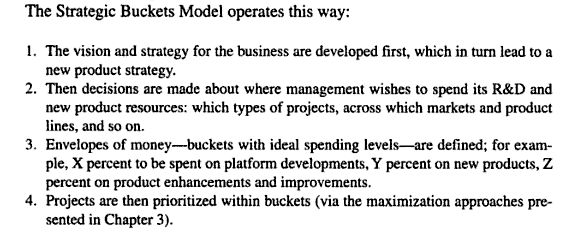
Clearly, this turned out to be a pretty complex and multifaceted story. My main takeaway, though, was that the Reds know they need to attract more fans and are working incredibly hard to do so. And not just working hard, but working in a highly specialized and professionalized manner. In the story, I note how much corporate speak flies around the team’s offices. So let’s give the last word to that tradition — here, the concept of “strategic buckets,” a concept which the Reds’ management is quite fond of, and a concept which I had to look up:

Presidents and Their Limited Editions

[Boston Globe]

I’m a little late in linking to this, but I wrote another story for the Boston Globe‘s Ideas section — this one on the crazy, opulent history of deluxe presidential memoirs, books that typically come with autographs, artificially limited print runs, and price tags as high as $1,500.

Along with my text, you’ll find some great photos from Jim Hier, a Portland man who works in finance — and who owns more than 400 different volumes autographed by presidents. Hier filled me in on the rise of presidential book collecting, and, while there wasn’t room for that in the story, I’ll sketch it here.

Nineteenth-century autograph hounds lusted after George Washington’s signature, so there is a history here. Still, for most of that history, collectors didn’t care about an autograph’s context. Hier remembers that, for a long time, books with presidential autographs actually came cheaper than letters or random squibs. “A lot of dealers looked at books as a bit of a nuisance,” he told me. “They were bulky, heavy, and hard to transport. One time, I got Eisenhower’s two-volume set at the end of a show for a big discount, just because the dealer just didn’t want to pack it home.”

Two things changed this. First, in 1982, Stephen Koschal published a book titled Collecting Books and Pamphlets Signed by the Presidents of the United States. It helped focus and drive the interests of collectors like Hier. The second change was the Internet, and websites like eBay and AbeBooks helped Koschal’s readers connect with each other. Rare and autographed presidential books still make up a small part of the book collecting universe, but Hier says interest (and prices) have grown substantially. In the 1970s and 1980s, Hier found new items all the time. “Now, I’m lucky if I can add one or two good books a year.”

That’s partly because Hier already owns so many amazing titles. (In addition to the mass produced books I talk about in my story, Hier owns unique books like a copy of Benjamin Henry Harrison’s This Country of Ours that the president signed for his wife.) But that’s also because, today, Hier has plenty of company.