Notes on the Johnstown Flood National Memorial (and on David McCullough)

[The New Republic]

The New Republic‘s just put out a special 9/11 issue, and I’ve got a feature in it on the long struggle to build the Flight 93 National Memorial in Shanksville, Pennsylvania. I don’t have a lot more to say about Shanksville, but I would like to write a bit about the Johnstown Flood National Memorial. Like the Flight 93 memorial, the Johnstown memorial sits in rural Pennsylvania and is operated by the National Park Service. Unlike the Flight 93 memorial, though, the Johnstown memorial commemorates something that happened more than a century ago. I visited Johnstown on my drive back from Shanksville; it helped me think, however approximately, about the way time inflects national tragedy.

It also helped me think about David McCullough. Before we get to him, though, let’s talk about the building of the Johnstown Flood National Memorial. In 1964, a Pennsylvania congressman pushed through a bill — well, he championed a bill; it was unanimously approved — that allocated $2 million to build two Pennsylvania memorials, one for the Allegheny Portage Railroad, the other for Johnstown Flood.

The Flood had provided the nineteenth century with its second biggest scandal, after Lincoln’s assassination. It all started at the  South Fork Dam, which backed up the Conemaugh River and created the  Conemaugh Lake. Next to the Lake sat the South Fork Fishing and Hunting Club, where the East Coast’s elite would come to, well, fish and hunt. One thing they didn’t do was worry about the fact that the South Fork Dam kept springing leaks. In 1889, though, it failed completely. Nearly 5 billion gallons of water spilled down through the mountains and into the steel mill city of Johnstown. Early telegram reports suggested that the Johnstown Flood had caused 10,000 casualties. The final count was bad enough: 2,200.

*  *  *

Around the same time Congress was taking an interest in the Johnstown Flood — they put the National Memorial ten miles above Johnstown, next to what was left of the South Fork Dam — David McCullough was taking an interest in it, too. It was an odd choice for both of them since memory of the Flood had largely faded. In fact, the only scholarship on the subject was a 1940 dissertation, which McCullough ended up thanking in the introduction to The Johnstown Flood, his first book.

In Paris Review interview, McCullough created a typically charming scene of the book’s origins:

When we were little kids, we used to make a lake of gravy in our mashed potatoes; then we’d take a fork, break the potatoes, and say, The Johnstown flood! — with no idea why in the world we did it. That was about all I knew about it until I saw the photographs of the flood, quite by chance at the Library of Congress. . . .  I wrote The Johnstown Flood at night after work. I would come home, we’d have dinner, put the kids to bed, and then at about nine I would go to a little room upstairs, close the door, and start working. I tried to write not four but two pages every night. Our oldest daughter remembers going to sleep to the sound of the typewriter.

Reviewers loved the book when it came out in 1968. They praised McCulloguh’s research and his writing — especially since he’d chosen an event where, as the Wall Street Journal put it, “no neat narrative line, centered on a dominant protagonist and with all ends neatly tucked in, is possible.”

A “neat narrative line”? A “dominant protagonist”? Today, that feels like a pretty fair description of McCullough’s historical method. Or at least of a prominent critique of that method, where Harry Truman or John Adams simultaneously shape and float above history.

*  *  *

It’s no surprise that McCullough’s Johnstown book didn’t sell like his later presidential ones. Still, it helped bring the Flood back to people’s attention. In 1986, as Johnstown was gearing up for the Flood’s centennial, the director of the city’s new Johnstown Flood Museum — not to be confused with the separate Johnstown National Memorial — could tell the A.P. with a relatively straight face that “it’s part of American folklore. Everyone’s heard of it.”

The government poured another $5 million into the memorial for renovations — by now, the key congressman was John Murtha — and a group of locals formed the Johnstown Flood Centennial Committee. The Committee made an ambitious schedule of more than 100 events. Still, everyone wanted to focus on the historical heroism of Johnstown’s everyday citizens. “We don’t want to build an amusement park,” another city booster told National Geographic.

*  *  *

Those sentiments echoed the ones I heard from anyone associated with the Flight 93 National Memorial. After spending three days there, I started the eight-hour drive back to Connecticut. It was a different route than the one I came on, a route that let me see the Johnstown Flood National Memorial. The memorial’s visitors’ center — the center was one of the things added for the Flood’s centennial — still stocked copies of McCullough’s book. When I stopped by, though, it lacked very many visitors. Thanks to strip mining, the Conemaugh River had turned the color of tomato juice.

Still, the combination of the visitors’ center, which had several wonderful displays drawn from McCullough’s research, and the geographical features — all that remained of the South Fork Dam were its two enormous sloping banks — made the memorial quite powerful. It left me wanting to visit the Johnstown Flood Museum, but I didn’t because I had to keep driving. Honestly, I hadn’t planned on being so moved by the experience.
The Reds, baseball’s attendance problem, and Cincinnati’s status as a “baseball town”

[Cincinnati Magazine]

In the July issue of Cincinnati Magazine, I’ve got a long story on the Reds and their fans. It could have been much, much longer, as my (very gracious) editor can attest. Still, I managed to put a lot of that ancillary stuff on this blog. I’ll link to those posts below — and if any Reds fans want to share their stories or some feedback, feel free to email or leave a comment.

I started with a post outlining my personal history with the team; from there, I wrote an analysis of the Reds’ place in pop culturea description of the Reds’ 1950s business operationa sketch of Cincinnati’s TV scene, circa 1972; and a link to the local sports radio segment I did (and that crops up in my story).

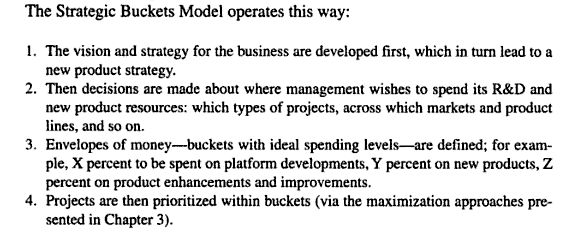
Clearly, this turned out to be a pretty complex and multifaceted story. My main takeaway, though, was that the Reds know they need to attract more fans and are working incredibly hard to do so. And not just working hard, but working in a highly specialized and professionalized manner. In the story, I note how much corporate speak flies around the team’s offices. So let’s give the last word to that tradition — here, the concept of “strategic buckets,” a concept which the Reds’ management is quite fond of, and a concept which I had to look up:

Writing the Civil War

[Boston Globe]

In this week’s Boston Globe — and exactly 150 years after the start of the Civil War — I’ve got a feature on the war’s impact on American literature. For pretty much all of those 150 years, people have been wondering why the Civil War didn’t produce any great contemporary works of literature. What gets overlooked in this is the number of great authors who did live and write during the 1860s: Whitman, Hawthorne, Melville, Emerson, and more. The history of American war writing stretches back at least to 1638, when Captain John Underhill chronicled the Pequot War in Newes from America. I learned that in Cynthia Wachtell’s excellent War No More: The Antiwar Impulse in American Literature. Still, the focus of my feature is Randall Fuller’s From Battlefields Rising: How the Civil War Transformed American Literature. Taken together, Wachtell and Fuller’s books suggest that, while the Civil War lacked a true literary masterpiece, it did clear the way for the antiwar writing we recognize today.

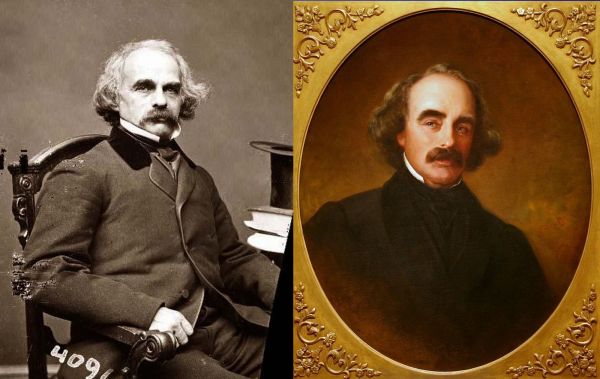
I want to expand on two things I didn’t have space for in my feature. First, the role of photography in the Civil War. Plenty of scholars have argued that this newish medium — notably through Mathew Brady’s 1862 gallery of Antietam — went a long way toward making the Civil War the grisly, realistic, and transformative experience it so surely was. But Fuller connects this idea to literary authors. While in Washington reporting “Chiefly About War-Matters” (the essay remains a great read and can be found here), Hawthorne sat for two visual portraits. The first (pictured above right) was a painting by none other than Emanuel Leutze, who remains best known for his Washington Crossing the Delaware and Westward the Course of Empire Takes Its Way. The second (above left) was a photograph by Alexander Gardner, the Brady photographer who supplied many of the Antietam shots.

The contrast between these two portraits gets at how transitional this moment was for visual culture.  But it also gets at the difference between painting and photography — a difference that played out in the war coverage, where, for the first time, people could choose between the sanitized, sentimental drawings in publications like Frank Leslie’s Illustrated Newspaper and photographs. When the New York Times wrote up Brady’s gallery, it praised its “terrible reality and earnestness.” “If he has not brought bodies and laid them in our dooryards and along the streets,” the Times continued, “he has done something very like it.” Hawthorne looks a lot better with the help of Leutze. The same was true of the Civil War’s violence.

Second topic: Walt Whitman’s taste in opera. At the start of my feature, I tell the story of Whitman walking out of the opera on the night of April 13, only to learn about the attack on Fort Sumter. Scholars love this anecdote for all the obvious reasons, but they disagree on the show Whitman attended. Most say it was Verdi’s Ballo in Maschera. But a few, like Mark Caldwell, in his cultural history New York Night: The Mystique and Its History, say it was Donizetti’s Linda di Chamounix. Curious, and wanting to get this right, I emailed Professor Caldwell to ask him why he went with Donizetti.  In a gracious and detailed reply, he explained that according to the listings Verdi was a matinée on April 13, while Donizetti was an evening performance on both April 12 and April 13.

Now, the news about Fort Sumter arrived in New York via telegraph on the afternoon of the 12th. This means neither show matches up perfectly with Whitman’s own account of hearing the news — an account he wrote more than a decade after the fact. Professor Caldwell told me he placed more weight on Whitman’s description of reading the news at night than on his specific mention of the 13th of April. That makes perfectly good sense. I did some more reading around — I didn’t see anyone air this debate out fully, though someone surely has — and decided to put more weight on the documented lag between telegraphs and newspapers and on Whitman’s ability to kill a few hours in Brooklyn. I hope that makes sense, too. Either way, Whitman had seen more than 20 opera performances before this one. He would have been happy with Verdi or Donizetti or both.

Hoosiers, Redux?

[Indianapolis Monthly]

In this month’s issue of Indianapolis Monthly, I’ve got a long feature on Milan, Indiana — the small town that inspired Hoosiers and that’s struggled ever since. The magazine’s website is in the middle of a redesign, so the story didn’t make it online. I’m posting a slightly longer version of it below the jump.

Continue reading Hoosiers, Redux?”

In Defense of Soundbites

[Boston Globe]

In today’s Boston Globe, I’ve got an essay on soundbites, the media, and political coverage. Ever since 1992, when Daniel Hallin documented that the length of the average TV soundbite fell from 43 seconds in 1968 to 9 seconds in 1988, people have worried about the shrinking soundbite and what it all means. In the early 1990s, critics blamed this trend on the “Age of MTV.” Today, of course, it’s the Age of the Internet. But as I try to show in my essay, soundbites have dropped in length for a variety of reasons — economic, political, historical, and professional. What’s more, they’ve been dropping for a long time, as new research suggests that newspaper quotations began shrinking in a similar way in the 1890s.

Instead of soundbites, then, we should worry about the tone and focus of our political discourse. And there’s no doubt that this, too, has evolved. In 1968, for example, Spiro Agnew said at a press conference that “Mr. Nixon is trying to cast himself in the role of a Neville Chamberlain.” Agnew meant to say that Hubert Humphrey had done this and quickly corrected himself. As Hallin noted, though, Agnew’s gaffe aired uncorrected and in the middle of a long soundbite on how the Democratic ticket had gone “squishy soft” on Communism and crime. Nobody blanched at his slip because something like it didn’t — and doesn’t — matter.

(One other note: the same year Hallin published his research, a Harvard sociologist named Kiku Addato published a research paper that corroborated Hallin’s findings. I didn’t mention her because it seems Hallin got there first — he told me he noticed the shrinking soundbite while researching his book on the media and Vietnam — and because her analysis lacked his complexity. You can read a .pdf of Addato’s paper here.)