The Bengals, Hamilton County, and the world’s worst stadium lease

[Cincinnati Magazine]

Well, after a couple teasers — a miscellany of quotations from the county official who became a Bengals exec; an appreciation of Mike Brown as a “near-brilliant litigator” — my feature on the Bengals and their stadium lease is finally here. The story doesn’t break much news, other than a few hints about a potential solution to this 15-year mess. But I do think it synthesizes that mess into a coherent story.

It’s also a very depressing story. If you follow Cincinnati sports and want something a little more uplifting, check out the previous story I did for the magazine — on the Reds and their efforts to win back their fans.

*  *  *

One more thing: I should elaborate on one part of my stadium-fund story — the end, where I claim the Bengals’ mistreatment of Carson Palmer “tells you everything you need to know about Brown.” After the issue went to press, the Bengals traded Palmer in one of the most slam-dunk deals of all time. That might seem like a vindication of Brown’s pettiness. After all, the Bengals now have two extra draft picks to go with their promising rookie quarterback. But I think this misses the larger picture. Throughout this saga, Brown treated Palmer, maybe the best (and certainly the nicest) player he’s ever drafted, with zero class. After the trade, Palmer took time to call the Cincinnati media, saying all the right things and handling the whole thing like a professional — like an adult. What did the Bengals do? Well, in the team’s statement — and you could obviously forget any interaction with the media — Brown didn’t even bother to thank Palmer for his years with the team. Marvin Lewis stooped even lower, bashing Palmer to reporters.

So here’s a question: how do you think players around the league perceived this? The Bengals have long struggled to lure free agents to Cincinnati. This offseason, Jonathan Joseph, a free agent and one of their best defensive players, bailed on the team despite its best efforts to resign him. Right now, it seems the Bengals can’t give their money away. Here’s a second question, then: What happens in five or six yeas when those two new draft picks become free agents?

Mike Brown’s business savvy

As mentioned earlier, I’ve got a story on Hamilton County’s beleaguered stadium fund coming soon in Cincinnati Magazine. The story runs to 4,000 words, but there were still lots of traumatic Mike Brown stories we couldn’t fit in.

Sometimes these stories seemed too tangential. (Remember when an aging Barry Larkin asked for grass in Riverfront Stadium? Brown [allegedly] blocked it because of the decades-long feud between the Bengals and the Reds — even though Larkin wanted off the knee-grinding astroturf so badly he was ready to pay for the switch himself.) Sometimes the stories were too detailed. (It would take plenty of space to explain how, since they’ve moved into Paul Brown Stadium, the Bengals have managed to sue their own fans — twice.) Sometimes the stories felt too thinly sourced. (Last year, Cincinnati CityBeat reported the recollections of a former township trustee who said Stuart Dornette and Bob Bedinghaus — two key members of the Bengals’ braintrust — came to him in 1995 with a quid-pro-quo election offer so long as he agreed to provide “a second vote on the County Commission for the stadium sales tax proposal.”)

Like I said, lots of stories. But there is one other episode, alluded to in my story, that I’d like to summarize here since it highlights one of the most frustrating aspects of the Mike Brown era. The Cincinnati media loves to praise Brown’s “business savvy.” They’re wrong to do this — Brown’s stubborn belief in Family First, and in his own football acumen, has cost him millions in profits and a whole lot of capital appreciation. But Brown does seem to be a near-brilliant litigator. And that’s what’s so frustrating — he becomes quite creative in legal matters, even as he refuses to spend on players or to delegate football decision-making.

One thing my story tries to do is show just how much money Brown made in the mid-1990s (and, by extension, how much he continues to make today). It’s not just the Bengals’ year-to-year profits, though those consistently rank near the top of the NFL. It’s the millions in salaries and bonuses collected by Brown and his family — and, more than that, the appreciation in the Bengals’ value, which is how modern sports owners make their real money.

This last point isn’t news to Brown. In fact, one reason he ran the Bengals so cheaply the 1990s — players flying in coach, whirlpools that didn’t work, and so on — is because he was funneling every spare dollar toward his attempt to buy out the team’s other major shareholders. In this, Brown succeeded. “From 1984 to 1993,” the Enquirer noted in 1999, “the Bengals paid out every penny of profit — $66 million — to shareholders.”

Why could the Enquirer note those numbers? Well, the Bengals ended up in tax court because of their deal, and even more numbers came out when the shareholders’ heirs decided to sue. You can see why they were angry: the Bengals’s valuation has skyrocketed from $8 million, when Paul Brown co-founded them in 1968, to $875 million today — and most of that growth came after Brown bought up all those shares. Again, he can be near-brilliant when the business matters line up with his worldview. But Brown also feels zero guilt when it comes to diverting money from the team’s best interests to his own. In 1989, the Bengals went to the Super Bow. Over the next decade — a time when Brown was maximizing profits in order to buy up stock — the Bengals ranked last in the NFL in wins and next-to-last in payroll.

In short, Mike Brown ran his team into the ground in order to hoover up its shares. If that angers you, it’s only because his priorities are not your own.

Speaking of priorities, here’s a sublime quotation from the Brown family’s testimony in that tax court case:

Super Bowl teams do not make as much money as the public thinks. Revenues are shared among all 28 teams and expenses are only borne by the teams that play in the Super Bowl. Super Bowl teams lose more money in the following years because they have to pay their players more for their superior performance.

A Bob Bedinghaus miscellany

In the November issue of Cincinnati Magazine, I’ve got a feature on Hamilton County’s beleaguered stadium fund — and on how Mike Brown and the Bengals deserve much of the blame for its beleaguered state.  The feature’s long — 4,000 words — but not long enough, and I’m going to write a couple of preview posts with bonus material. Up first: a collection of retrospectively hilarious-slash-depressing quotations from Bob Bedinghaus.

For the uninitiated: As county commissioner in the 1990s, Bedinghaus did more than anyone to create the stadium fund and to finance Paul Brown Stadium. Then he lost reelection bid in 2000 — the first time a Republican had lost to a Democrat in this race since Lyndon Johnson was president. Then he got hired by the Bengals. (He’s pictured above in his stadium office.)

Anyway, the wit and wisdom of Bob Bedinghaus:

  • Describing his 1995 meeting with Mike Brown: “I walked away from there with a pretty good gut feeling that I could trust him.” [link]
  • Describing his 1995 meeting with David Milenthal, CEO of the ad agency that used astroturfing to win the stadium proposal: “The first instruction from Milenthal was, SHUT UP.” [link]
  • April of 1997 (when people were fretting the two stadiums would cost $675 million): “[The final cost will be] nowhere near that range.”  [link]
  • (N.B. The two stadiums ended up costing well over a billion dollars.)
  • November of 1997: “I think it’s expected there would be a healthy amount of buyer’s remorse. . . . It’s not too much different than someone who buys a new car or new house and then starts to rethink the decision.” [link]
  • May of 1998: “I don’t know how anybody could be prepared to have gone through what I went through. . . . At some point I’ll walk away from the county commission knowing I’ve played a role in changing the direction of the community.” [link]
  • August of 2000: “[The Bengals are] an organization that’s run by lawyers, and they look for every penny around every corner. . . . It’s going to be a difficult relationship going forward for the next 30 years.” [link]
  • August of 2000: “The unfortunate reality of dealing with the Bengals is dealing with their lawsuits.” [link]
  • August of 2000 (and in a debate with his political opponent, Todd Portune): “Are people angry about the cost of the stadium? Without a doubt. Will people realize that we made some of the tough decisions to make the investment to make this community better? I’m confident they’re going to see that.” [link]
  • (N.B. The Bengals hire Bedinghaus somewhere around here. One of his job titles: Director of Stadium Development.)
  • April of 2009 (and in response to Portune’s [admittedly ill-thought-out] proposal to sell the stadium’s naming rights): “The image that there is a pot of gold at the end of this rainbow for Hamilton County is not as shiny as it seems.” [link]
  • November of 2010: “What we have found in our experience is that . . . Cincinnati is not an A-list city. Concert promoters are looking to put on events in areas where there is the most likelihood of success.” [link]

I’m tempted to end with the poetic contrast between Bedinghaus-the-public servant and Bedinghaus-the-Bengals exec. But let’s give the last word to Mike Brown, who, in February of 2000, when Bedinghaus’s reelection campaign was heating up, told the Enquirer that “Bob has taken a stand for the future of Hamilton County. . . . He was willing to risk his political future. We need more people like him in politics.” [link]

When Bedinghaus lost the election, Brown, an avid reader of history, compared him to Winston Churchill.

The Reds, baseball’s attendance problem, and Cincinnati’s status as a “baseball town”

[Cincinnati Magazine]

In the July issue of Cincinnati Magazine, I’ve got a long story on the Reds and their fans. It could have been much, much longer, as my (very gracious) editor can attest. Still, I managed to put a lot of that ancillary stuff on this blog. I’ll link to those posts below — and if any Reds fans want to share their stories or some feedback, feel free to email or leave a comment.

I started with a post outlining my personal history with the team; from there, I wrote an analysis of the Reds’ place in pop culturea description of the Reds’ 1950s business operationa sketch of Cincinnati’s TV scene, circa 1972; and a link to the local sports radio segment I did (and that crops up in my story).

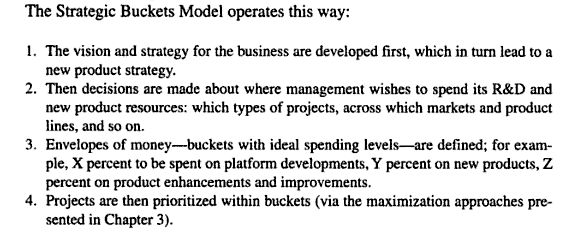
Clearly, this turned out to be a pretty complex and multifaceted story. My main takeaway, though, was that the Reds know they need to attract more fans and are working incredibly hard to do so. And not just working hard, but working in a highly specialized and professionalized manner. In the story, I note how much corporate speak flies around the team’s offices. So let’s give the last word to that tradition — here, the concept of “strategic buckets,” a concept which the Reds’ management is quite fond of, and a concept which I had to look up:

The Cincinnati Reds in pop culture [UPDATED]

Heck of a game last night. It was such a good game, in fact, that after Joey Votto laced the winning hit into right field, I did a fist pump. Now, that’s a ridiculous gesture when I’m watching the game at home and alone. But it’s a leperous gesture when I’m watching it in a press box, where nobody cheers and Votto’s hit was greeted with a collective tapping of the backspace button, as the reporters, true professionals all, began rewriting their ledes.

Let’s change the subject. One thing I’ve been asking fans is whether or not they think Cincinnati is a “baseball town.” That’s a cherished idea around here. But it’s also a difficult one to test, outside of attendance figures. One of my friends made a really smart suggestion: do baseball and Cincinnati get paired up in pop culture? Think about the TV shows and movies set in Boston or Chicago. You’ll invariably get two cop partners, one a Cubs fan, the other a White Sox, or marriage proposal that occurs at Fenway. (Is that how that Jimmy Fallon / Red Sox movie ended? You couldn’t pay me enough money to watch it, but the trailer suggests something along those lines.)

Anyway, the point is Boston and Chicago are “baseball towns.” Not only do their teams attract consistent crowds and dominate the local conversation, they also cause writers and directors to invoke those teams when they want to represent the Real Civic Character. Is the same thing true of Cincinnati? It’s got a much smaller pop cultural canon, but the answer seems to be no. I didn’t see anyone wearing a Reds hat in Traffic. The kids of Glee never road-trip it to a Reds game. When The Brady Bunch came to Cincinnati, they stuck to Kings Island.

I can think of only two positive examples. The first is Rain Man, where Dustin Hoffman sleeps in a Reds shirt, keeps a picture of Crosley Field on his wall, and can recite the career statistics of Ted Kluszewski. Those details suggest someone living in Cincinnati might follow the Reds, but I don’t think they suggest that this is a “baseball town.” The other example comes from WKRP in Cincinnati. In an episode in the second season, the titular station hires Sparky Anderson to host a show. (You can watch the episode here.) Anderson acts remarkably well — his best line: after his show flops, he deadpans that “every time I come to this town, I get fired” — but this episode was the only time the show really delved into baseball. The message, again, seems to be that Cincinnati has a baseball team — but not that Cincinnati is a baseball town.

If anyone knows of other Reds mentions on TV or film, please drop me an email or leave a comment. Now, I’m going to go interview some fans.

[UPDATE, 5/20/2011:] I got some great responses on the Reds in pop culture thanks to a link from Red Leg Nation. Here’s a synthesis of the comments from that site and this blog. Thanks, guys!

  • A lot of people noted Reds asides in various movies. In Good Will Hunting, Robin Williams talks about the 1975 World Series, though that seems like more of a Red Sox allusion than a Reds one. Similarly, the Reds crop up in Field of Dreams, but I’m scoring that movie for the White Sox. In Angels in the Outfield, the Angels’ owner tells his new manager, a Reds import, that “they expect you to win in Cincinnati. It’s different here.” In Blues Brothers, someone wears a Reds hat during the Bob’s Country Bunker scene. In Airborne, which is set in Cincinnati, a rollerblade race ends at Cinergy Field. In High Anxiety, Mel Brooks learns a lounge patron hails from Cincinnati and says, “Love that Big Red Machine.”
  • The Big Red Machine also provided the best examples of Reds players doing celebrity endorsements and commercials. Pete Rose did Gillette and Aqua Velva; Johnny Bench did Krylon (“No runs, no drips, no errors”). More recently, Ken Griffey Jr. did plenty of national ad campaigns. Aroldis Chapman did a Pepto Bismol commercial that can only be described as Lynchian. (Watch it here.)
  • The Reds boast a few celebrity fans, most notably George Clooney and Charlie Sheen. You also see a number of rappers wearing Reds hats, though this stems less from fandom than from the Bloods borrowing the team’s iconography.
  • My favorite example of the Reds in pop culture came from a commenter named Dale. “I have an 8 year old daughter who loves American Girl dolls,” Dale wrote. “There is one doll in the lineup that is based in the 1930s. Her name is Kit Kittredge and she is a huge Reds fan. Her favorite player is Enie Lombardi. This is all documented in the book Kit’s Home Run. I remember there being a Reds outfit for sale in the catalog as well as a game giveaway of an outfit at GABP a few years back.”

I’d say the Kit Kittredge example comes closest to disproving my thesis — that people outside of Cincinnati don’t really link the city to its team (or think of the city because of its team) in any unique or lasting way. But the other examples all support it. They also suggest that things may have been different during the Big Red Machine. It wouldn’t be the first time that brief and glorious era has distorted our perception of the Reds’ relationship to their city and their fans. But that’s a topic for another day. In the meantime, here’s one more example of the Reds in pop culture from the 1970s. In his book The Machine, Joe Posnanski says the Reds became so popular that Arthur Jones, who had just invented something called a Nautilus, decided to donate one of his first working models to the team’s clubhouse. Jones hoped this would popularize his device. The only problem was that, in those days, baseball players looked down on weightlifting. In fact, Tony Perez used the Nautilus to torment the team’s younger players, telling them that they were on Sparky Anderson’s “list” for Nautilus duty.