A review of Paul Theroux’s “Last Train to Zona Verde”

[Boston Globe]

In the Boston Globe, I’ve got a review of Paul Theroux’s latest (and possibly last) major travel book, Last Train to Zona Verde. For long stretches it’s really good, but I still found myself disappointed with the end, where Theroux cuts his trip short. “I could put my head down and travel farther,” he writes, “but I know what I would find: decaying cities, hungry crowds, predatory youths, and people abandoned by their governments.”

In the review, I admit that it’s easy to criticize Theroux from your reading chair — but  also that his stubborn explorations are what have always made him so special. I think he’d have a counter to my complaint, and while I didn’t have room to acknowledge it in the review I do here.

When Theroux published Riding the Iron Rooster, which described his mid-80s trip through China, several reviewers attacked him for being too pessimistic about the Middle Kingdom and its leaders. (One review’s headline? “Grouchy Traveler Back on the Rails Again.”) Theroux responded in an essay titled “Travel Writing: The Point of It.” The best travel writing, he argued, “makes the immediate future of the particular country coherent. The books are also, incidentally, the adventures of individuals.”

Theroux knew what he was talking about when it came to China’s immediate future. After all, he wrote his essay in the aftermath of Tiananmen Square, which made his criticisms of China’s ruling class look freakishly prescient. But that, to Theroux, was simply the mark of good travel writing: “I had just written truthfully of what I had seen over the course of a year in China,” he observed at the end of his essay, “and writing the truth can sometimes seem like prophecy.”

I think Theroux would say something similar about his new book on Africa: it’s so bleak about the continent’s cities because bleakness is the appropriate response now (and, in a few years, will seem prophetic). This may be true — Theroux’s track record is certainly good — but I’d counter his counter like this: in Riding the Iron Rooster, he made it all the way across China. In Zona Verde, he quit. He settled for “knowing what he would find.”
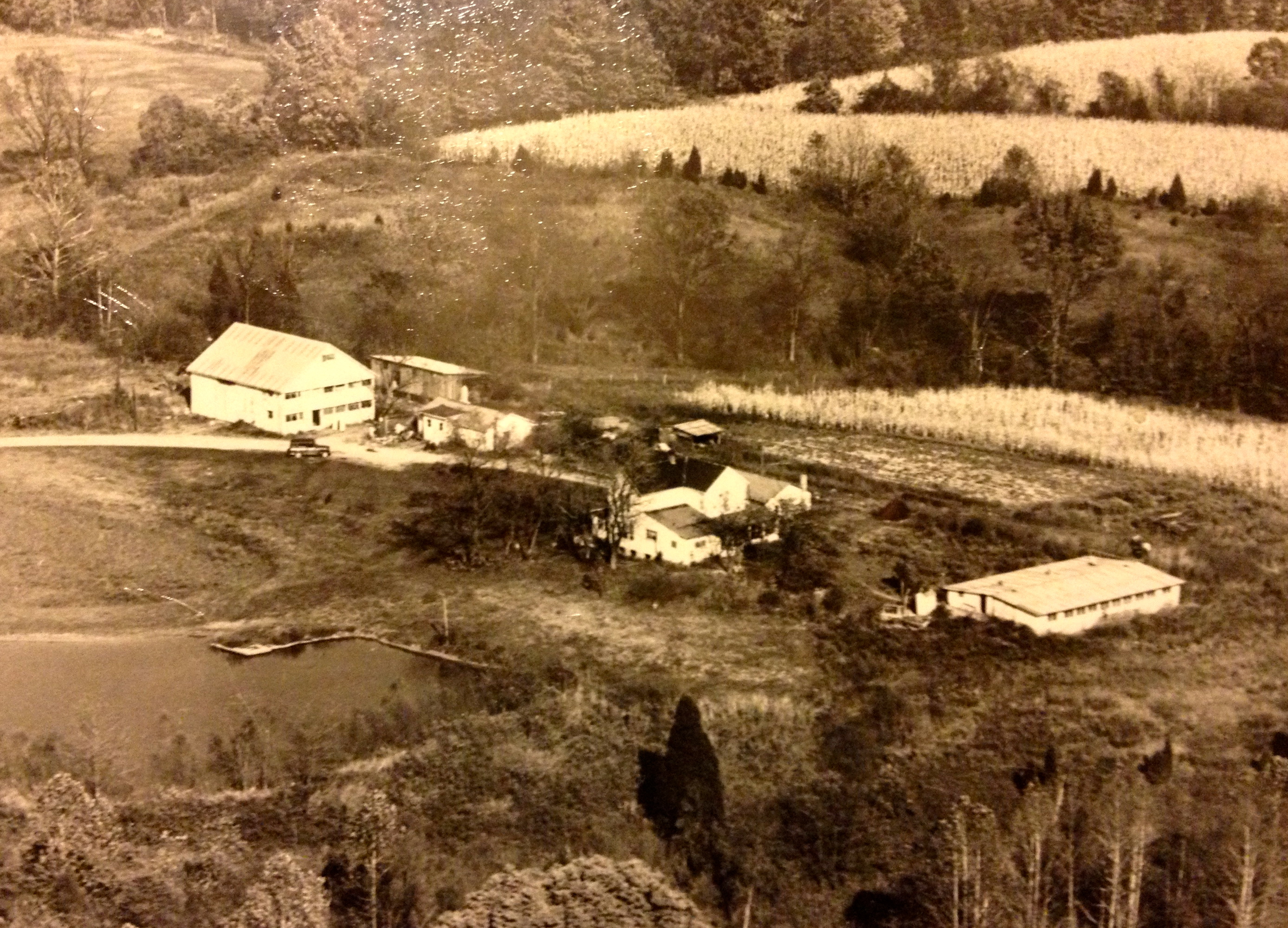
Frank Bill and the new Midwestern lit

[The American Prospect]

photo

In the latest issue of The American Prospect, I’ve got a long review of Frank Bill’s novel Donnybrook. I also consider a small but growing number of Midwestern fiction writers, including Donald Ray Pollock and Bonnie Jo Campbell, and write a bit about growing up there myself. (That’s my family’s house, in the picture above.)

One of the harder things to do in this review was to articulate what exactly these writers are up to — hard because, for whatever reason, they’re not too keen on articulating it themselves. What I ultimately settled on is that they’re trying to develop a new literary realism — and, more than that, to revive a literary naturalism.

Here’s Pollock in an interview

I can go out here and pick up the local newspaper, and bring it in here, and I can show you things that are just as bad or worse, probably worse, than anything that’s in my book. So what’s the big deal? I mean, I am maybe exploring something that a lot of people don’t want to think about, but people do live like this.

And here’s Bill:

For me to write all that stuff, I didn’t really have a general idea, or theme when I wrote. I just wrote what interested me about society and class as a whole. People who are still here, but you don’t see them or hear about them anymore. You read about them in small town newspapers, people who are jobless, and they disappear all over the place. You don’t read about people living in cars or camping spots in books.

The realism seems obvious enough — they’re making an effort to undercut our cultural assumptions about the Midwest. Where it crosses into naturalism, I think, is when it declines to grant its characters any inner psychology. Check out my review for more on this. And if you want to know more about Bill, read this great cover story in Indianapolis’s alt-weekly. Bill talks a lot about how, when he started writing fiction, he wrote pages and pages about the environments and nothing else. It doesn’t get more naturalistic than that!

A review of Jeanne Marie Laskas’s Hidden America

[The Boston Globe]

In Sunday’s Boston Globe I’ve got a review of Jeanne Marie Lasksas’s new book Hidden America: From Coal Miners to Cowboys, an Extraordinary Exploration of the Unseen People Who Make This Country Work. Laskas is one of the best magazine writers in America, and I tried to demonstrate some of the things she does well in my review: getting perfect quotes, showing deep empathy, and always telling stories. I could keep adding to this list — she does a great job stimulating all five senses; she gets so close to her characters that she can turn over whole pages to them and their drama-like dialogue; she does the John McPhee process thing almost as well as the master himself — but I was also struck by something she didn’t do. With one small exception, Laskas avoids making herself a character the way many of today’s flashiest magazine writers choose to.

If you read Harper’s or GQ, you know this trick: the author presents him- or herself as a bumbling (or, less frequently, haughty) narrator who, in the course of the reporting, reaches some kind of flashback-driven epiphany. It’s a great trick, and in a really good essay in Bookforum Gideon Lewis-Kraus traces its origin back to David Foster Wallace. Wallace, Lewis-Kraus writes, was “the great writer-worrier of his time.” And thanks to Wallace’s example, “insofar as there’s a prevailing aesthetic among the best young ‘magazine writers’ of our time, it’s the counterintuitively affirmative: What our nonfiction narrators do now is perform the overcoming of contempt.” You’ll find this performance in essays by John Jeremiah Sullivan, Tom Bissell, Jake Silverstein, George Saunders, Elif Batuman, and Lewis-Kraus himself.

But you won’t find it in the essays of Laskas. She achieves authenticity in a different way: by using her skills as a writer-observer to bring out the best and most human side of her characters. Maybe she does this by necessity — in her chapter on truck drivers, Laskas includes a few bits of memoir that, while well intentioned, fall flat —- but maybe she does it by choice. Laskas’s essays are less rhetorical than those of Wallace et al.; after all, the first-person trick aims partly at seeming authentic and partly at being persuasive. But that lack of rhetoric actually feels pretty refreshing. It’s so easy to imagine a book on “Hidden America” turning into a sermon on “Real America.” But in Laskas’s hands it doesn’t. She does the minute so well that it ends up mattering all by itself.

“A typical case of a small-town boy who betrayed his roots”: David Foster Wallace as a Midwestern writer

[Chicago Reader]

In this week’s Chicago Reader, I’ve got a long review-essay on David Foster Wallace. The review part centers on Every Love Story is a Ghost Story, D. T. Max’s new biography of the author, and the book is just OK. Still, it let me explore Wallace’s relationship to the Midwest  — that’s the essay part — and I hope readers find it intriguing and persuasive.

Now, I could go on about this stuff all day — about how Max’s book corroborates Jonathan Franzen’s essay on Wallace’s inner ugly side; or about how much I’ve come to respect the work of David Lipsky, who consistently got the best quotations out of Wallace (and whose reporting Max relies on relentlessly). But I’ll limit myself to one final aspect of Wallace and the Midwest, and that’s how the region responded to his own writing about it.

The best example comes in the reaction to Wallace’s Harper’s essay on the Illinois State Fair. (You can find a .pdf here.) An editor at the magazine had heard about Wallace moving back to Illinois, and he called the novelist — his U-Haul was still sitting in the drive-way — and pitched him the idea of reporting on the 1993 State Fair. Out of this assignment sprang the nonfiction style that Wallace would later describe to Lipsky as “basically, you know, welcome to my mind for twenty pages. See through my eyes.”

The essay came out the next summer, and it was pure Wallace  — funny, intellectual, empathetic. But most local readers didn’t see it that way. In fact, in a column that ran in Springfield’s State Journal-Register, Toby McDaniel blasted Wallace and his “poison pen.” The State Fair’s organizers were even more outraged, and McDaniel quoted Joe Khayyat, a fair spokesman, at length:

There are so many inaccuracies and inconsistencies in this story, it really doesn’t deserve a response. In fact, the only thing the author seems to be consistent with is his gross misrepresentation of the fair and his use of profanity. It’s a typical case of a small-town boy who betrayed his roots when the big city went to his head.

This defense gets deployed any time a Midwestern author produces non-brochure copy about the Midwest, and Wallace’s essay proves how wrong it is. So too does his response to Khayyat and McDaniel. In the State Journal-Register‘s second story on the affair, which ran a few weeks later, a different reporter, Mike Matulis, asked Wallace for his side. “To be perfectly honest with you, Khayyat’s comments bother me,” Wallace told him. “If the piece came off that way, as some one sneering at the Midwest, then that’s really a deficiency in the piece. It really wasn’t meant to do that.”

For the rest of the story, Wallace praised the State Fair — “There is an intensity about the livestock shows that is the same intensity you see in Lincoln Center” — and the state itself.  “It’s incredibly cheap to live here, and I haven’t heard a car alarm since I moved,” he told Matulis. “I’m not kidding.” Wallace was only getting warmed up: “People smile and say ‘hello,’ I don’t have to lock my house every day and women sometimes walk at night by themselves. And when there is a ghastly murder here, it’s an enormous deal.”

He ended the interview by reaffirming his affection for the Midwest: “My resting pulse rate is lower here. It’s really very nice.” And yet, as late as 2010, the State Journal-Register was still smarting about Wallace’s essay. It’s a colorful and, I think, telling episode about Wallace’s personality and his relationship to readers. But while Max includes some interesting details about the accuracy of Wallace’s nonfiction (“We quietly agreed that his nonfiction was fanciful and his fiction was what you had to look out for,” Wallace’s sister tells him), he never mentions this little State Fair dust up. Nor does he examine the way Wallace’s journalism evolved from “welcome to my mind” to the intensely rhetorical style of his later pieces. These are just a couple examples of why Every Love Story is a Ghost Story is a disappointment, both in terms of its details and its interpretations.

A review of Matthew Tully’s Searching for Hope

[NUVO]

In this week’s NUVO, an alt weekly in Indianapolis, I’ve got a review of Matthew Tully’s Searching for Hope: Life at a Failing School in the Heart of America. Tully’s a very good columnist at the Indianapolis Star, and while Searching for Hope isn’t great, it’s almost certainly the only book anyone will write about Indy’s inner-city schools for a long time.

The review isn’t online, so I’ll put the full text after the break. One more thing:when I write about Indiana, it’s normally to write about high school basketball. Well, the high school Tully covered just sent its team to regionals. This story didn’t get much attention, but it does line up with the few brief moments of hope in Tully’s book.

Continue reading “A review of Matthew Tully’s Searching for Hope