A review of George Packer’s “The Unwinding”

[Christian Science Monitor]

In the Christian Science Monitor, I’ve got a review of George Packer’s wonderful new book, The Unwinding.

Back in 2005, in a a profile of Packer published in the Columbia Journalism Review, David Glenn praised the author’s previous book, on the Iraq war: “When he couches his voice within long narratives about other people’s lives . . . Packer’s ambivalent and restless approach to the world can be extremely powerful. The accretion of details in the book is consistently moving and provocative.” That can double as an apt description of Packer’s new book, as well, and I can’t recommend it enough.

Glenn’s profile is also worth reading, as it recounts how Packer discovered (and, for a time, resisted) his approach:

His aim was to create a narrative voice that could tell vivid human stories while simultaneously leading the reader through complex political and historical arguments and leaving room for curiosity and ambivalence. “That narrative voice doesn’t emerge by talking about yourself,: Packer says. “It emerges by — in a way, by how strong an observer you are, and by how strong a thinker you are.”
A review of Paul Theroux’s “Last Train to Zona Verde”

[Boston Globe]

In the Boston Globe, I’ve got a review of Paul Theroux’s latest (and possibly last) major travel book, Last Train to Zona Verde. For long stretches it’s really good, but I still found myself disappointed with the end, where Theroux cuts his trip short. “I could put my head down and travel farther,” he writes, “but I know what I would find: decaying cities, hungry crowds, predatory youths, and people abandoned by their governments.”

In the review, I admit that it’s easy to criticize Theroux from your reading chair — but  also that his stubborn explorations are what have always made him so special. I think he’d have a counter to my complaint, and while I didn’t have room to acknowledge it in the review I do here.

When Theroux published Riding the Iron Rooster, which described his mid-80s trip through China, several reviewers attacked him for being too pessimistic about the Middle Kingdom and its leaders. (One review’s headline? “Grouchy Traveler Back on the Rails Again.”) Theroux responded in an essay titled “Travel Writing: The Point of It.” The best travel writing, he argued, “makes the immediate future of the particular country coherent. The books are also, incidentally, the adventures of individuals.”

Theroux knew what he was talking about when it came to China’s immediate future. After all, he wrote his essay in the aftermath of Tiananmen Square, which made his criticisms of China’s ruling class look freakishly prescient. But that, to Theroux, was simply the mark of good travel writing: “I had just written truthfully of what I had seen over the course of a year in China,” he observed at the end of his essay, “and writing the truth can sometimes seem like prophecy.”

I think Theroux would say something similar about his new book on Africa: it’s so bleak about the continent’s cities because bleakness is the appropriate response now (and, in a few years, will seem prophetic). This may be true — Theroux’s track record is certainly good — but I’d counter his counter like this: in Riding the Iron Rooster, he made it all the way across China. In Zona Verde, he quit. He settled for “knowing what he would find.”

Frank Bill and the new Midwestern lit

[The American Prospect]

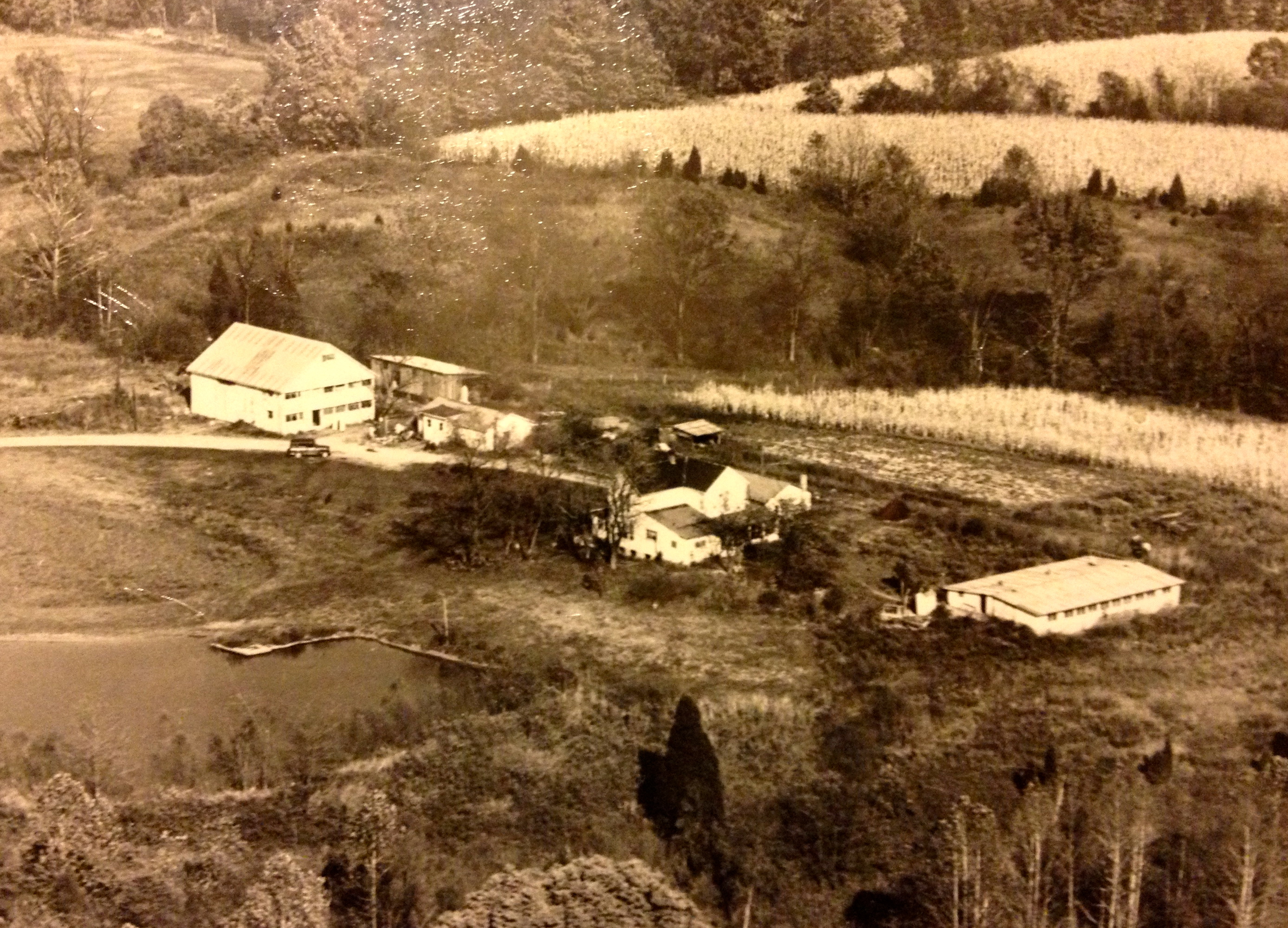
photo

In the latest issue of The American Prospect, I’ve got a long review of Frank Bill’s novel Donnybrook. I also consider a small but growing number of Midwestern fiction writers, including Donald Ray Pollock and Bonnie Jo Campbell, and write a bit about growing up there myself. (That’s my family’s house, in the picture above.)

One of the harder things to do in this review was to articulate what exactly these writers are up to — hard because, for whatever reason, they’re not too keen on articulating it themselves. What I ultimately settled on is that they’re trying to develop a new literary realism — and, more than that, to revive a literary naturalism.

Here’s Pollock in an interview

I can go out here and pick up the local newspaper, and bring it in here, and I can show you things that are just as bad or worse, probably worse, than anything that’s in my book. So what’s the big deal? I mean, I am maybe exploring something that a lot of people don’t want to think about, but people do live like this.

And here’s Bill:

For me to write all that stuff, I didn’t really have a general idea, or theme when I wrote. I just wrote what interested me about society and class as a whole. People who are still here, but you don’t see them or hear about them anymore. You read about them in small town newspapers, people who are jobless, and they disappear all over the place. You don’t read about people living in cars or camping spots in books.

The realism seems obvious enough — they’re making an effort to undercut our cultural assumptions about the Midwest. Where it crosses into naturalism, I think, is when it declines to grant its characters any inner psychology. Check out my review for more on this. And if you want to know more about Bill, read this great cover story in Indianapolis’s alt-weekly. Bill talks a lot about how, when he started writing fiction, he wrote pages and pages about the environments and nothing else. It doesn’t get more naturalistic than that!

Xavier’s next great team

[Cincinnati CityBeat]

As part of their cover package on the NCAAs, Cincinnati CityBeat asked me to write about Xavier’s lost season. The Musketeers didn’t just whiff on the NCAAs — they whiffed on the NIT, too. But as I argue in my story, Xavier’s future, for next season and for the next decade, looks bright.

If you’re interested in more on Xavier, check out a long profile I wrote of head coach Chris Mack last year (with more info here and here).

And in the small chance you’re interested in still more Xavier, check out Shannon Russell’s excellent interview with Mack. You’ll see that he’s the most honest coach in Cincinnati sports and, in my opinion, a big reason why Xavier’s in great shape.

A profile of Vito Montelli

[New York Times]

In today’s New York Times, I’ve got a long profile of Vito Montelli, who coached the boys’ basketball team at St. Joseph High School for 50 years — and to 11 Connecticut state championships.

Montelli’s a great character, and you should also check out the photos by my friend Chris Capozziello. But one of the things that drew me to this story was a chance to think about a larger question: why high school sports aren’t as big in New England as they are elsewhere in the country. We had to cut a lot of that material, and I hope to write about it again in the future. But I will say that while New England high school athletics occur on a smaller scale, there are pockets of passion and commitment.

One of those is at the gym in Ridgefield, Connecticut, where I watched Montelli’s successor, Chris Watts, coach (and win) his first game. Ridgefield is not a traditional state power, but a couple years ago it hired a new athletic director and coach named Carl Charles. Charles used to be an assistant under Montelli, and he’s built up a solid program — and a serious home-court advantage.

Like most Connecticut high schools, Ridgefield has a small gym — there wasn’t enough room for the St. Joe’s cheerleaders, which meant they sat behind the bench — but at least a quarter of the seats were devoted to the Tigers’ Lair, the school’s college-quality student section. The Tigers’ Lair boasts a Twitter feed, a collection of inventive cheers (when Watts walked out, they chanted “Vito Montelli”), and one of those custom Big Heads signs for Kurt Steidl, the senior star who is heading to the University of Vermont on a scholarship. Now, I’ve been to a lot of high school basketball games, including a bunch in basketball-crazy Indiana, but Ridgefield and the Tiger’s Lair had one of the best atmospheres I’ve ever seen. It was a fun game for a lot of reasons. (In the fourth quarter, Montelli, who was sitting next to the cheerleaders, motioned a St. Joe’s assistant over: “Let Chris know he has two fouls he can give.”) But most of all, it was fun because of some great basketball — Watts didn’t need any help, as he masterfully coached St. Joe’s to a 48-42 win — and because of some crazy fans. In fact, I’d stack those fans up against those from anywhere in the country.